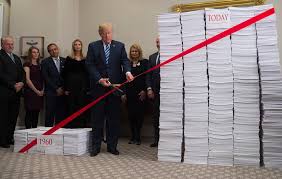
The tariffs are not going to cause inflation. Prices are coming down.
How They Responded: "Get Ready For An Inflation Spike"
The Evidence: 2.7%, Not 6%
Inflation has an official monthly number too: the Consumer Price Index from the Bureau of Labor Statistics. The catastrophic spike that surveys and economists braced for (6%-plus) never showed up in the data.
What The CPI Data Shows:
- December 2025 CPI came in at 2.7% annual, unchanged from November, and less than half the 6.6% one-year inflation consumers had expected in May. Source: CBS News / BLS
- For full-year 2025, the CPI rose about 2.7% December-to-December, roughly flat versus the 2.7% reading at the end of 2024, despite the new tariffs. Source: CBS News / BLS
- CBS News reported the tariffs "didn't reignite inflation to the extent that some economists had predicted," in part because retailers absorbed costs rather than fully passing them to consumers. Source: CBS News
The Bottom Line:
Bureau of Labor Statistics (Primary Data): The Headline Inflation Number
The prediction was a recession and a runaway 6%-plus inflation spike that would crush American families. The official Consumer Price Index says otherwise: inflation held at 2.7% through 2025, less than half the 6.6% consumers had braced for. The catastrophe forecast was the argument used to claim Trump’s entire agenda would backfire. Measured against that specific, quantified doom prediction, the outcome was a clear miss for the forecasters.
Read The CPI ReportU.S. Energy Information Administration (Primary Data): Gas Prices Fell, They Didn’t Spike
The single price families feel most directly went the opposite direction of the catastrophe forecast. Before the March 2025 Iran conflict pushed energy markets higher, U.S. gas prices had fallen to their lowest levels in years. The EIA confirms regular gasoline averaged $3.10/gal in 2025, the third consecutive year of declining prices, with March 2025 the cheapest March since 2021 and Memorial Day prices the lowest since 2020 in inflation-adjusted terms. Prices bottomed at $2.81/gal in late December.
Read The EIA DataWhat Has Surfaced Since Trump Returned
Every forecast was catastrophic: tariffs would ignite runaway inflation, crash markets, and tip the economy into recession. Since Trump returned and imposed them, the catastrophe never arrived. The economy kept growing, the recession the experts warned of never came, the tariffs pulled in record revenue, and the only inflation spike of the period traced to an unrelated Middle East energy shock, not the trade policy Trump was condemned for. The doom that was promised simply did not happen.
The Recession They Promised Never Came
The tariff opponents did not just predict higher prices, they predicted collapse: a self-inflicted recession, mass layoffs, and an economy in freefall. None of it materialized. Growth continued, the labor market held, and economists' own surveys kept the odds of a recession low even at the peak of the tariff fight. The Congressional Budget Office, hardly a Trump cheerleader, concluded that whatever upward pressure the tariffs put on prices would be temporary, fading as the policy settled in. The apocalyptic forecast was wrong on every count, exactly as Trump insisted it would be.
Tax Foundation, Tariff Tracker: Trump Tariffs and Trade War by the Numbers, 2026The Tariffs Delivered Record Revenue Instead of Ruin
Far from wrecking the economy, the tariffs became one of the largest new revenue sources in modern federal history. Customs duties brought in roughly $264 billion in calendar year 2025, more than triple the $79 billion collected the year before, the highest effective tariff take since the 1940s. Money that critics swore would simply vanish into higher consumer prices instead flowed into the U.S. Treasury, paid in large part by foreign exporters fighting to keep access to the American market. The leverage Trump said tariffs would create turned out to be real and measurable.
Committee for a Responsible Federal Budget, Tariff Revenue Soars in FY 2025, 2026The Only Real Price Spike Came From Iran, Not Tariffs
When inflation finally did jump, reaching 4.2% in May 2026, the cause was not the tariffs at all. It was energy: gasoline and energy prices surged on the back of the conflict with Iran, accounting for more than 60% of the entire monthly increase, a geopolitical shock with nothing to do with trade policy. Strip energy out and core inflation rose just 2.9% over the year and a mere 0.2% on the month, proof that there was no broad tariff-driven price spiral. For most of the period gasoline had actually fallen to multi-year lows. The one inflation headline critics could point to had a foreign-war origin, not a tariff origin, leaving the original 'tariffs will cause an inflation spike' prediction exactly as wrong as it looked the day it was made.
Morningstar, May CPI Report: Energy-Driven Inflation Is Contained, June 2026The Vindication: The Spike Forecast Missed
The prediction wasn't "inflation will tick up a little." It was a spike, surveys pricing in 6.6%, warnings of stagflation. Measured against that specific, quantified fear, the outcome of 2.7% was a clear miss for the doom forecast.
The tariffs didn't reignite inflation to the extent that some economists had predicted, with consumer prices rising 2.7% in December.
The Pattern:
- Consumers braced for 6.6%; the actual reading was 2.7%, the fear was more than double reality. Source: CBS News / BLS
- A Fed analysis (surfaced after Chair Powell’s removal, when the predicted-catastrophe narrative needed a new footing) argued tariffs added cost at the margin. Even taken at face value, that marginal effect is nowhere near the catastrophic 6%-plus spike that was forecast, and it did not stop overall inflation from holding at 2.7% or gas prices from falling. Source: Federal Reserve analysis (via Reason)
Final Analysis
This is a case where the honest scorecard matters more than the slogan. There is a real, two-sided story here, and we're going to tell both sides.
To be precise about what was and wasn't proven:
- The forecast was a recession and a runaway 6%-plus inflation spike; CPI instead held at 2.7%, less than half the feared 6.6%
- Gas prices, the cost families feel most, fell to multi-year lows in early 2025 before the March Iran conflict, the opposite of the predicted catastrophe
- A post-hoc Fed analysis (published after Powell's removal) argued for a marginal tariff cost, but a marginal effect is not the runaway spike that was forecast
- The bottom line: the specific, quantified doom prediction missed badly, and the everyday-cost story (CPI and the pump) went Trump's way
The lesson is direct: credentialed voices made a confident, quantified prediction of catastrophe (6%+ inflation, recession, stagflation). The headline inflation number landed less than half that high, and gas prices fell to their lowest in years. Whatever marginal cost a later Fed analysis claims at the edges, the spike everyone was warned about simply did not materialize.