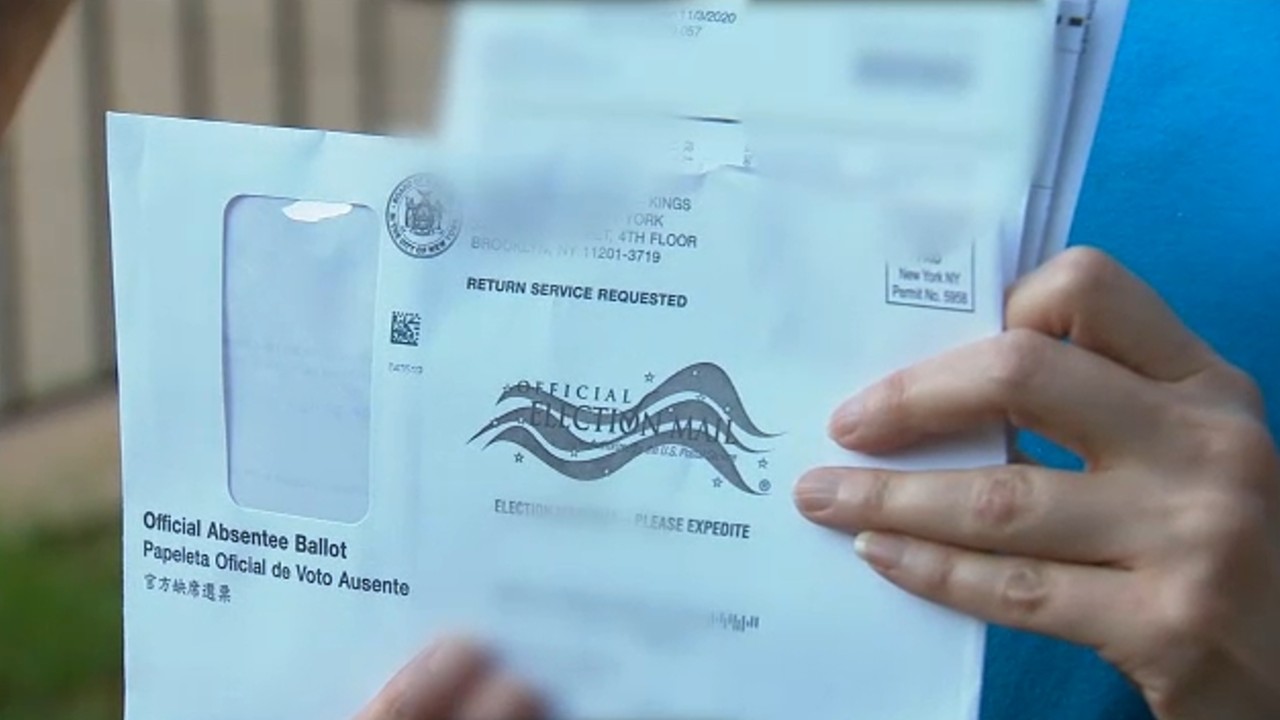
The Unsolicited Mail In Ballot Scam is a major threat to our Democracy, & the Democrats know it. Almost all recent elections using this system, even though much smaller & with far fewer Ballots to count, have ended up being a disaster. Large numbers of missing Ballots & Fraud.
Watch Trump's Warnings About Mail-In Voting
How They Responded: "Trump Is Undermining Democracy"
 NPR
NPRThe Evidence: Trump Was Right
Despite widespread dismissal of Trump's concerns about mail-in voting vulnerabilities, subsequent investigations and arrests across multiple states have revealed significant issues with ballot security, validation processes, and fraud schemes that exploit the mail-in voting system.
Key Facts About Mail-In Voting Investigations:
- In 2024, five Democratic operatives in Bridgeport, Connecticut were arrested on charges of absentee ballot tampering, including the Democratic Town Committee Vice Chairperson
- In 2021, four individuals in Texas were arrested on 150 counts of voter fraud related to mail-in ballot harvesting at assisted living centers
- Former Lodi, California City Council member Shakir Khan pleaded "no contest" to felony charges after investigators found 41 sealed, completed ballots in his home
- Kimberly Zapata, former Milwaukee Election Commission Deputy Director, was charged with misconduct and absentee ballot fraud for requesting military ballots under false names
What Has Surfaced Since Trump Returned
Trump spent years arguing that mass mail-in balloting, unverified registrations, and opaque voting systems invited fraud and eroded confidence in elections. Back in office, his administration moved those arguments from the campaign trail into formal federal action, and what has surfaced since is a concrete, documented effort to verify rolls, examine machines, and tighten mail-ballot rules, exactly the agenda critics once called a fringe obsession.
The Concerns Became Formal Federal Policy
On March 25, 2025, Trump signed Executive Order 14248, Preserving and Protecting the Integrity of American Elections, directing the Election Assistance Commission to require documentary proof of citizenship on the national voter-registration form, mandating voter-verifiable paper-ballot records, and tightening the rules under which mail-in and absentee ballots are issued. A follow-on order in 2026 directed federal agencies to build citizen-verification lists and restrict mail-ballot delivery to eligible voters. The chain-of-custody and verification concerns Trump had raised were now being treated as a serious federal-policy problem, not a talking point.
NPR, Trump signs a new executive order on voting, March 31, 2026The Government Began Examining the Machines Themselves
The skepticism about voting-system security stopped being rhetorical. Under Director of National Intelligence Tulsi Gabbard, a federal team seized voting machines from Puerto Rico and contracted former intelligence-community specialists to perform forensic work assessing their susceptibility to foreign hacking. The resulting ODNI report confirmed the machines carry real security gaps and need hardened software, vindicating exactly the warning Trump was ridiculed for: that the systems counting America's votes were never as secure as officials insisted.
Nextgov/FCW, Gabbard's expanded role in election security draws scrutiny, February 2026Many States Refused to Open Their Voter Rolls
When the Justice Department demanded full, unredacted voter rolls to check them for ineligible registrants, most states refused, handing over only public versions. The DOJ filed roughly 31 federal lawsuits to compel disclosure, including against 18 states that were mostly Democratic-led and every one of which Trump lost in 2020. The bluest, Trump-losing states fought hardest to keep their rolls hidden from federal review, the exact lack of transparency he had warned about all along.
NPR, Trump's DOJ has sued 18 states to try to access voter data, December 12, 2025A Clerk Got Caught Destroying Mail Ballots to Flip an Election
In June 2026 the Hempstead school district filed a 51-page petition with New York State accusing its own district clerk, April Keys, of smuggling official ballots out of her office and handing absentee ballots to favored candidate Victor Pratt so he could trash the ones he did not like. Pratt won by 81 votes despite finishing third on the in-person machine count, carrying 87% of absentee ballots and 55% of early mail ballots against just 27% of machine votes. The fraud lived almost entirely in the mail and absentee pile, the exact attack surface Trump was ridiculed for warning about, and it was caught only because the numbers were too lopsided to hide. Two workers were placed on administrative leave and Keys now faces possible criminal charges while the district fights to overturn the result.
News 12 Long Island, Hempstead School District Requests State Review for Election Results, 2026The Vindication: Cases Prove Trump Right
 Washington Times
 New York Times
Official Confirmation:
Carter-Baker Commission (Bipartisan Primary Source): Building Confidence in U.S. Elections: Report of the Commission on Federal Election Reform (Carter-Baker, 2005)
"Absentee ballots remain the largest source of potential voter fraud."
View SourceU.S. Department of Justice (Federal Conviction): United States v. Kim Phuong Taylor, 52 Counts of Voter Fraud
A federal jury convicted Kim Phuong Taylor of 52 counts of voter fraud after she "caused absentee ballots to be fraudulently requested and cast," submitting dozens of registrations and absentee-ballot request forms containing false information and signing voter forms without voters' permission. She was sentenced in 2024. Notably, the scheme was to benefit a Republican candidate, proof that absentee-ballot fraud is a real, prosecutable vulnerability, not a partisan talking point.
View DOJ ReleaseFinal Analysis
Trump's warnings about mail-in voting have been thoroughly vindicated by subsequent events. The pattern is now familiar: Trump raises legitimate concerns about election integrity, is dismissed as a conspiracy theorist, and then proven right by concrete evidence.
Major media outlets have been forced to acknowledge significant irregularities in mail-in voting, including Reuters' reporting of suspicious vote dumps and the Washington Times survey revealing widespread voter fraud. The criminal cases and investigations continue to mount, proving that Trump's concerns about mail-in voting were not just valid but prescient.
This episode demonstrates how Trump's critics often dismiss his warnings as baseless conspiracy theories, only to be proven wrong by subsequent evidence. The mail-in voting controversy shows that Trump's concerns about election integrity were legitimate and that his critics' attempts to suppress these concerns may have contributed to the very problems they claimed didn't exist.